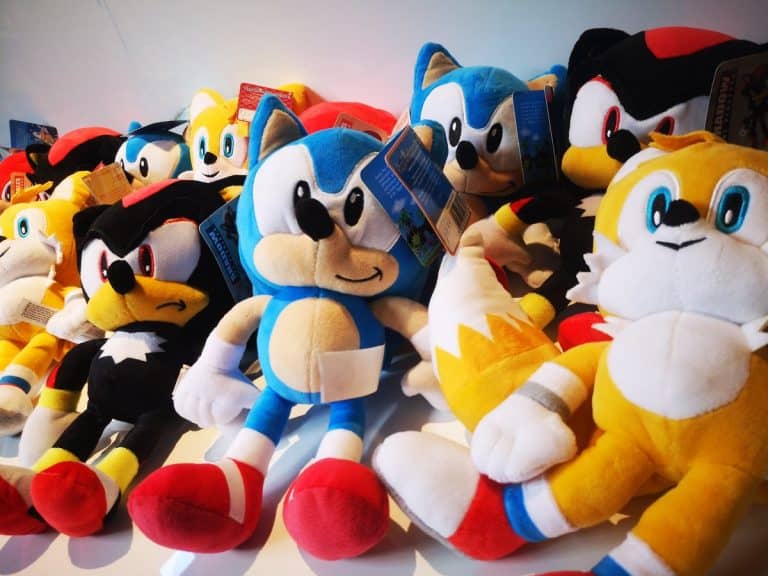
Sonic’s Birthday
Some advice… If you ever find yourself in the lucky position of running a videogame festival or museum, one of the constant challenges you’re going to have is developing a constant, varied programme. It’s a useful exercise to look toward forthcoming videogame anniversaries or birthdays as a starting point. These can not only provide you with a helpful “free” focus for building programming around, but are supplied with the added benefit of generally attracting people predisposed into wanting to have a good time. Even if you throw a birthday party for a character people hate, they’re more likely to just not attend than show up and try and ruin it. Mostly.
This year Sonic the Hedgehog reaches his 30th Birthday and I thought it might be interesting to look back over a few of the ways we’ve thought about him with the public over the years.
Despite Sonic being not just an iconic character, but one of the few globally recognised icons of an entire industry, we’ve actually done relatively little playing of the Sonic games at the museum. That’s something you can do at home, right? We’re trying to discover new ways to explore Sonic and what he means to audiences without necessarily demanding that visitors play the game – because games can be HARD! This is one of the things we think about a lot and on of our core questions – do you need to be able to play a game, in order to be able to understand it?
We began our relationship with him at his fifteenth birthday during the very first GameCity Festival. We were first alerted of Sonic’s extraordinary power to convene a crowd when we held a birthday tea-party in his honour at a cafe in Nottingham. An hour before opening an eager queue of fans had already formed, all clamouring to have their photograph taken with this icon of gaming – in this case performed by an intern in an excellent (if sweaty) costume that SEGA lent us. All of this was preface to the main event of the day, a solo piano recital of SEGA classics given by Richard Jacques in a 14th Century Church. Stripped of its synthesised instrumentation and placed in a beautiful venue with a particularly loaded atmosphere, audiences were able to enjoy the soundtrack in a very different way. Jacques played. People cried. It ended up being on of the most emblematic events we did in establishing the early tone of our programming.