Don’t Copy That Floppy!

As long as there have been videogames, there have also been people trying to copy them. In the 80s, players became seasoned pirates, equipped with cassettes instead of cutlasses! By the 90s, optical media like discs had made it harder – but not impossible with the right tools. And today? Many copied games can still be found online. Alongside abandonware – games whose copyright is abandoned. These copies are not legal to download. Yet they do preserve a game history often at risk of being lost. From the start, the videogames industry created its own tactics to prevent theft. This could include ways to make copying harder. It could include media campaigns. And it could even include in-game warnings for pirated copies! Both sides of the story have their place in videogame history. So join us as we navigate the high seas of videogame piracy!

ZX Spectrum 1982 Developer: Sinclair Research Manufacturer: Timex Corporation

The ZX Spectrum aimed to be the most affordable home computer ever. It was produced by Sir Clive Sinclair and designed by Richard Altwasser. This 8-bit home computer was released when home computers had only had colour for two years. The ZX Spectrum’s name and rainbow design outlined its colour capabilities. The ZX Spectrum launched careers for many game developers. But ironically it was also used for game piracy in the process, with some using its features to copy games.

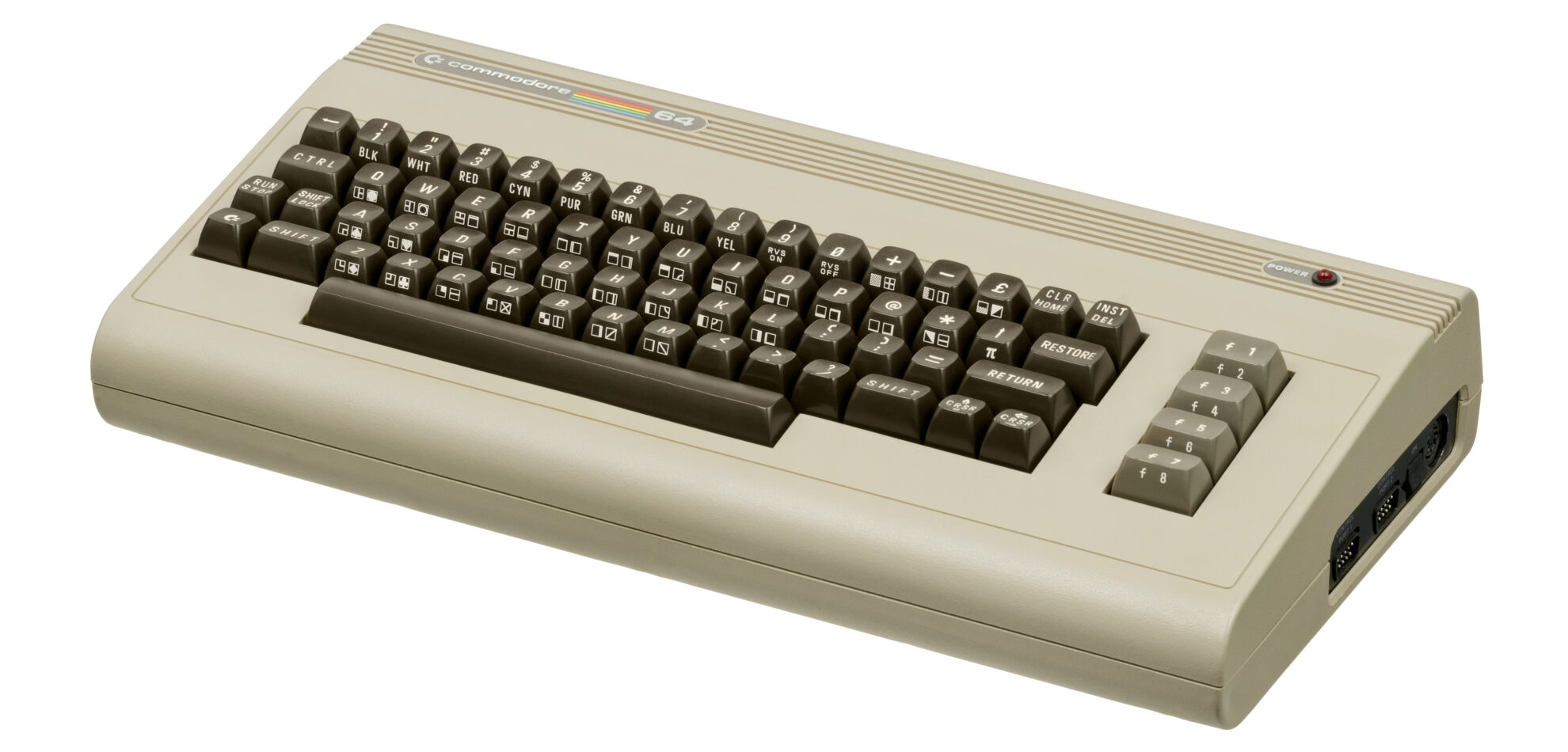
Commodore 64 Manufacturer: Commodore Business Machines Date of production: 1982

The Commodore 64 is an 8-bit computer you could run cassettes on to play videogames. Commodore 64 games were simple to copy with a tuned in Hi-fi system. This happened via reel to reel taping of a Commodore game onto a blank cassette. BBSs (Bulletin Board Systems) were used to arrange ‘file swapping’. This being said, the web at the time couldn’t generally support game sizes via modem transfer. A pirate’s solution? Hard copy in the form of tapes and disks! Games would often be taped with other games attached or in incomplete forms.Players would buy games with no labels, no names and sometimes no knowledge of what type of game they were getting (and whether it would work!). Commodore 64 was only replaced as the king of piracy due to DOS based PCs becoming more easily available.

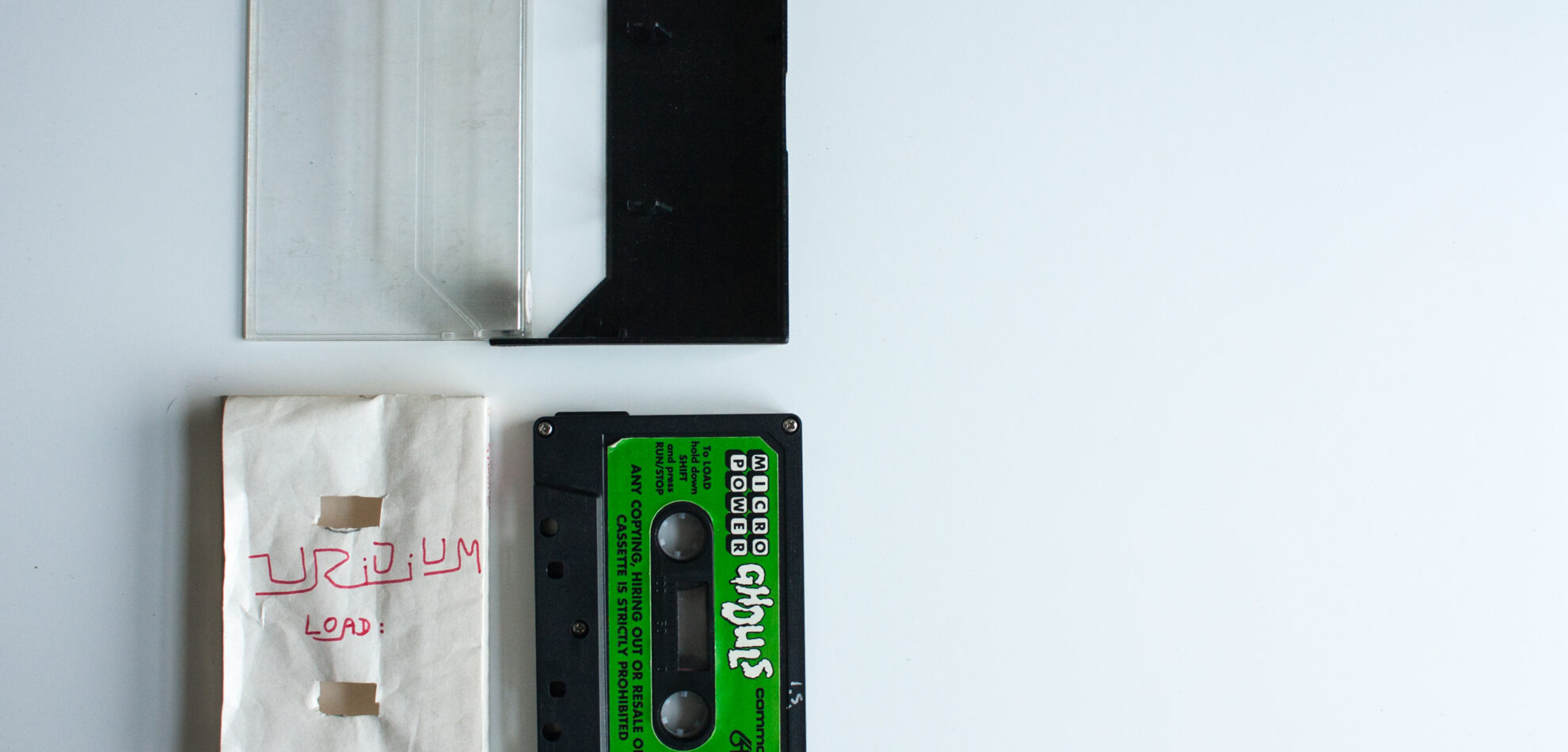
Cassette tapes (1980s)

Throughout the 1980s, many home computer games were distributed on cassette tapes. These were very easy to copy at home using ordinary hi-fi equipment. The videogame industry has always been concerned with software ‘piracy’. However these cassettes show pirates not just copying games, but their artwork. These would have been played on the Commodore 64. Of course, piracy can also mean copying a game’s original idea. Can you guess what game ‘Munch It’ drew inspiration from? Hint: you can find a version of the original game in our Arcade Collection!

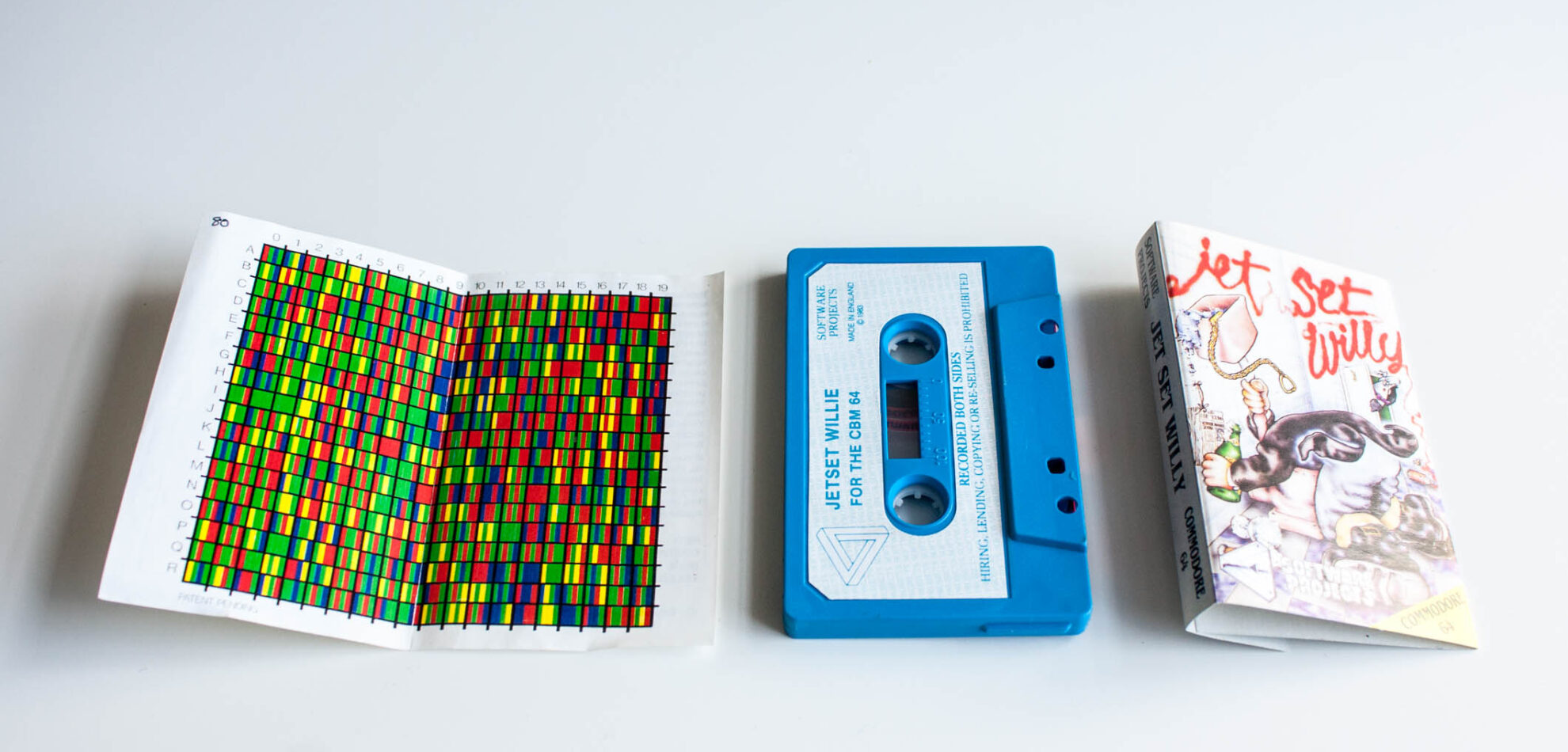
Software protection card (1984), Software Projects

In the 1980s, videogames distributed on cassettes made copying easy with tape-to-tape recorders. So in 1984 players opening their copy of Jet Set Willy would find something new packaged with their game. A card showing a grid of boxes with four selected coloured bars. The game would ask the player to enter the correct colours on a grid to start playing – or else. The aim was for the card to be too complex to copy by hand – and 80s photocopiers to be unable to reproduce its colours. A pirate’s only hope? An expensive colour photocopier – or patience and some felt-tip pens.

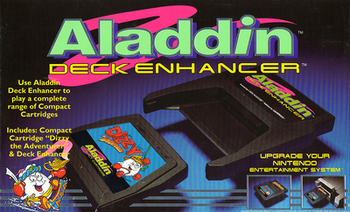
Aladdin Deck Enhancer (1992), Richard Darling

Because it wanted to control who created and sold games for its NES system, Nintendo restricted the number of games a developer could create in any one year. They also authorised every release by incorporating a security chip into official cartridges that only Nintendo knew the key to. That is, until UK developer Richard Darling cracked the code and created the Aladdin Deck Enhancer. The Deck Enhancer was launched in November 1992 though only 7 compatible games were ever released.

Freeloader 1996 Manufacturer: Datel

Many games don’t get released in certain countries. They are also modified through translation and conversion. Animal Crossing for the Nintendo GameCube released in Europe three years after its release in Japan! But what if European players didn’t want to wait three years? The Freeloader disc allowed games from any region in the world to be played on any GameCube console. It bypassed the checks that the console performed at startup, stopping it from rejecting discs not intended for play in that part of the world. It essentially made the console region free.

Action Replay, 1998-1999 Manufacturer: Datel

We can think of piracy as copying and illegally sharing a game. But what about piracy as hacking a game and cheating its system? Action Replay is a cheating device which can be used across a range of gaming platforms. This can include making the playable character stronger. But it can also mean loading “homebrew” non-commercially licensed games that have been made independently to a console. To this day, many different players can modify and create cheat codes for a game.

Don’t Copy That Floppy!

Did I hear you right? Did I hear you saying that you’re going to make a copy of a game without paying? Don’t Copy That Floppy! Produced by SIIA (formerly SPA) in 1992.

Watch the video here!

Piracy. It’s a Crime

You wouldn’t steal a car… If these dreaded words sound familiar, then maybe you’ve witnessed this infamous anti piracy awareness video between 2004 and 2007…or seen it referenced and parodied from that point onwards. It was created by the Federation Against Copyright Theft and the Motion Picture Association in cooperation with the Intellectual Property Office of Singapore. This would appear in cinema ad segments as well as on many DVDs.

Watch the video here!

Spyro Anti-Piracy Cutscene

What happens if you’re playing a pirated game? The developers of Spyro wanted to make sure there were real consequences when it came to any player enjoying their game on stolen software. Which led to quite a unique in-game experience in which Spyro would be informed of the illegal nature of the game copy being played with. Before the game’s mechanics started to slowly but surely break down, making it essentially impossible to play!

Watch the video here!